Wondering how far one charge really goes? Here's what to check before you buy
Advertised range is a best case. Watt-hours, charge cycles and the price of a replacement pack tell you what the bike will actually cost to run.
Choosing, paying for and running a pedal-assist electric bicycle as everyday adult transport
The watt-hour formula
Nominal voltage multiplied by amp-hours gives watt-hours, the only capacity figure that compares directly across brands. A 36V 14Ah pack and a 48V 10.4Ah pack hold roughly the same energy despite very different labels.
One rider worked out where the price of a pedal-assist bicycle actually lands, then wrote down the running costs, the legal classes and the parts that wear out sooner. Everything here is from riding, servicing and reading the statutes, not from selling anything.
Test conditions behind range claims
The range figure on a spec sheet is a laboratory result dressed as a promise, and the conditions behind it are almost never printed next to it. Somewhere a rider of modest weight, on level pavement, in still air, at the lowest assist setting, with correctly inflated tires and no cargo, rode until the pack died. That number is real. It is also the ceiling, not the average, and the gap between it and your commute in February with a backpack and a headwind is wide enough to strand you. What follows is how to check the claim before you pay.
Read the conditions, then discount the number
Four things move range more than anything else: your total weight including the bike and whatever you carry, the assist level you actually ride in, elevation change, and temperature. A rider who leaves the bike in the highest setting because it feels good is drawing several times the current of a rider spinning along in the lowest, and the pack does not care which one the brochure imagined. Cold matters too, since lithium cells deliver less usable energy near freezing and recover it when they warm. Assume real-world range lands well below the advertised figure, and plan around the version of the ride you will actually take.
Watt-hours are the only number that compares
Range claims are not comparable across brands, because each manufacturer chooses its own test. Watt-hours are. Multiply the nominal voltage by the amp-hour capacity: a 36-volt pack rated at 14 amp-hours holds about 504 watt-hours, and a 48-volt pack at 10.4 amp-hours holds about 499, so those two bikes carry nearly the same fuel despite looking different on paper. Every serious listing publishes voltage and amp-hours somewhere, and a seller who publishes neither has told you something useful. Once you know the watt-hours, note roughly how many you consume per mile over your first month, and the arithmetic gives you a range you can trust because it is yours.
What degradation looks like over a few years
A lithium pack loses capacity as it accumulates full charge cycles, and it loses a smaller amount simply through calendar aging, faster if it spends its life stored full or hot. The practical effect is gradual rather than sudden: the commute that once ended with two bars left starts ending with one, then starts ending with the motor cutting out on the last hill. Manufacturers usually state a cycle count at which the pack still holds a defined share of its original capacity, and that stated figure, not the headline range, is the honest durability spec. Charging to around eighty percent for daily use, and storing the bike indoors, both stretch the timeline.
Check the replacement pack before you check anything else
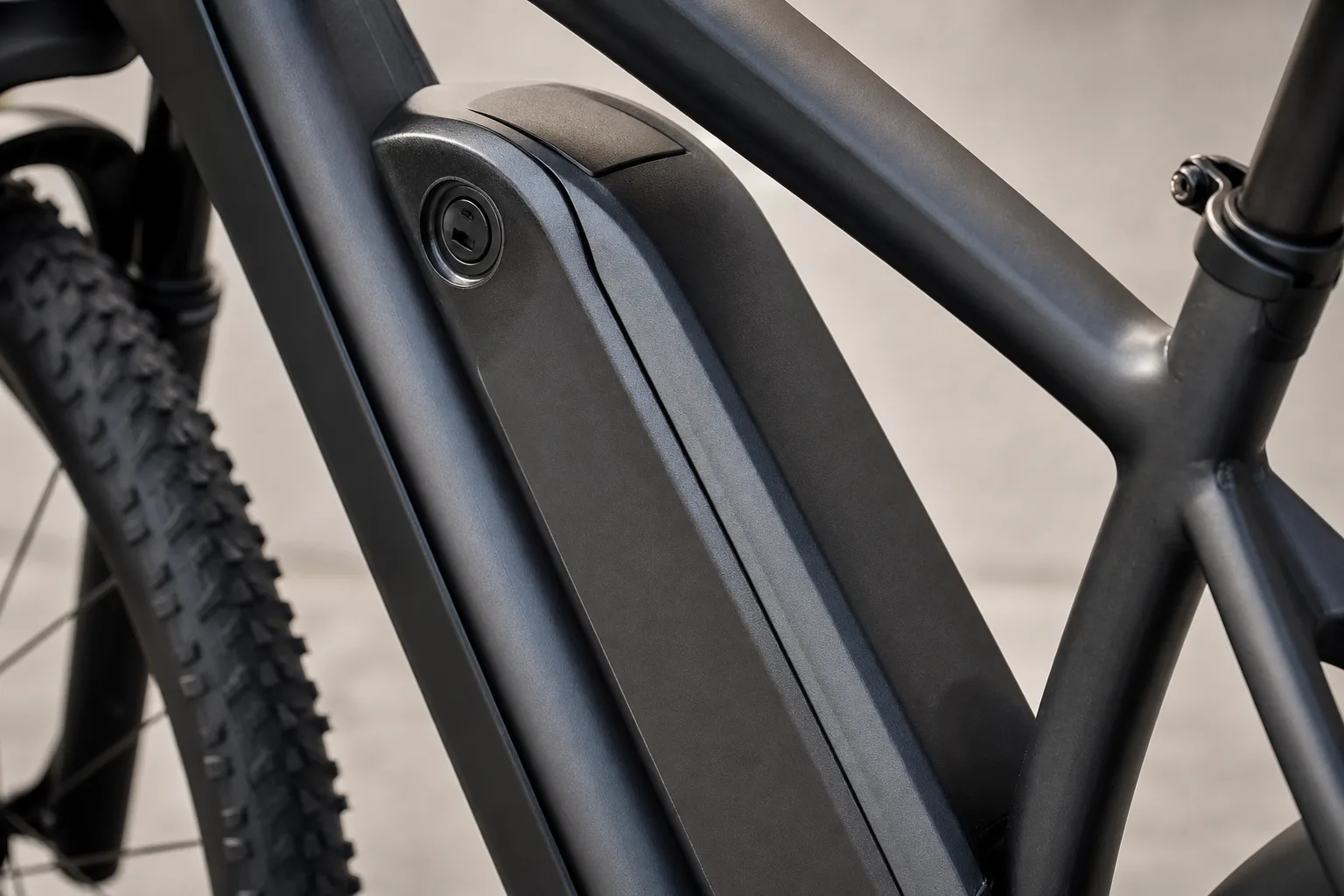
The battery is the single most expensive component on the bike, and on many models it is proprietary: a specific case, a specific mount, a specific connector, a specific battery management system keyed to that frame. That means one supplier, one price, and no substitute. A pack built to a common standard, or one from a large system maker whose parts turn up on many brands, gives you competing sources and a much longer support tail. Before you buy, search for the replacement pack by part number and confirm it is actually in stock somewhere other than the manufacturer's own site. If nothing comes up, you are looking at a bike with an expiration date.
When the pack is no longer made
Older e-bikes, and bikes from brands that have folded, routinely reach the point where the original pack is discontinued. There are usually three ways forward: a compatible aftermarket pack in the same case, a rebuild in which a shop replaces the cells inside your existing housing and reuses the management board, or a conversion to a standard mount that accepts widely sold packs. Rebuilds are legitimate work when done by a shop that does them regularly, and shipping rules for lithium cells mean this is often local work rather than mail order. The Consumer Product Safety Commission oversees product safety for consumer goods including these batteries, which is reason enough to use a shop that will show you what it installs.
Ask the seller for voltage, amp-hours, the rated cycle life, the replacement part number and a current price for it. Five answers, one email. A dealer who has them ready is telling you the bike was designed to be kept.