Motor, weight, speed. The parts that wear out first and what to check before you buy
Pads, tires, chains and spokes all age faster on a pedal-assist bike, and a few purchase-day choices decide how much of that you pay for.
Choosing, paying for and running a pedal-assist electric bicycle as everyday adult transport
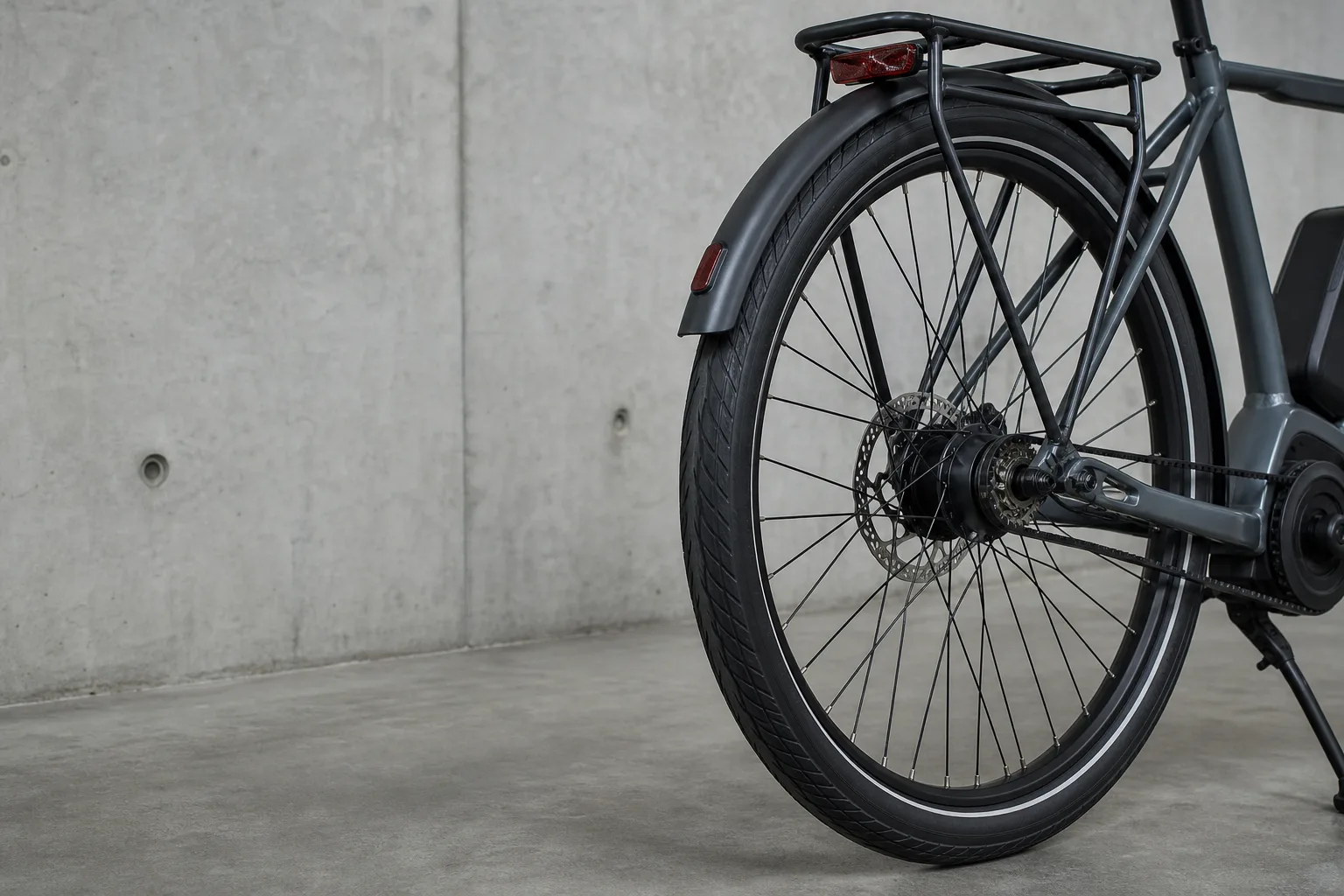
Rear tire wear rate
The rear tire on an e-bike carries the weight and takes the drive torque, so it typically wears out well before the front. Swapping front and rear partway through their life evens out the cost.
One rider worked out where the price of a pedal-assist bicycle actually lands, then wrote down the running costs, the legal classes and the parts that wear out sooner. Everything here is from riding, servicing and reading the statutes, not from selling anything.
Rotor size matters
A pedal-assist bike is a bicycle that weighs about half again as much as the one it replaced, carries a rider who now averages several miles an hour faster, and gets ridden far more often because it is pleasant in a headwind. Every one of those three facts shortens the life of something that rubs, rolls or flexes. None of it is a defect. It is arithmetic, and the useful response is to know which consumables move to a shorter schedule, what the shop will charge to keep up with them, and which components are worth specifying on purchase day rather than replacing in disappointment six months later.
1. Brake pads, because stopping energy scales with mass and speed
Pads go first, and they go noticeably first. A loaded commuter e-bike with rider and groceries can weigh well over twice what a light road bike and rider weigh, and the energy the brakes have to turn into heat rises with speed as well as mass. What a careful reader checks on the spec sheet is rotor diameter and piston count: larger rotors shed heat better and wear pads more slowly, and four-piston calipers spread the work. Sintered metallic pads last longer than organic in wet grit, at the cost of some noise. Buy the bigger rotor at purchase.
2. Tires, which are doing structural work now
Tires on an e-bike are carrying more static load, absorbing more impact energy, and being driven by a motor that can spin them against a curb. Rear tires wear conspicuously faster than fronts, sometimes at twice the rate, because that is where the weight and the drive torque both sit. Check for an e-bike rating on the sidewall, which usually indicates a tougher casing and a thicker tread, and check the puncture protection belt, because flats on a fifty-pound bike are a far bigger nuisance than flats on a light one. Rotating front to rear buys back some of the difference.
3. Chains and cassettes under mid-drive torque
A hub motor drives the wheel directly and leaves the drivetrain roughly alone. A mid-drive motor puts its torque through the chain, which means the chain, chainring and cassette absorb the combined output of legs and motor on every climb. Plan on replacing chains more often than you did, and measure with a chain wear gauge rather than waiting for skipping, because a stretched chain that is left on will take the cassette with it. Shifting under power is what kills drivetrains fastest, so ease off the pedals through gear changes. That habit is worth more than any component upgrade.
4. Spokes, rims and the rear wheel build
Wheels are where cheap builds show up. Spokes fail from repeated flex, and a heavier bike ridden faster over the same broken pavement flexes them more; a rear wheel with a hub motor has short, steep-angled spokes that tolerate less. The Consumer Product Safety Commission is the federal body responsible for bicycle equipment safety standards, and reputable brands build to them, but standards do not distinguish a hand-tensioned wheel from a machine-built one. What a careful reader checks is spoke gauge, whether the wheel was tensioned by hand, and whether the shop will re-tension after the first few hundred miles. That service appointment prevents most broken spokes.
5. Annual service, and which shops will actually take the job
Budget for two full services a year rather than one, and expect each to include pads, a chain check, brake bleeding on hydraulic systems, and a wheel truing. Ask the shop three things before you buy the bike: its hourly labor rate, whether it is a certified dealer for that motor system, and whether it will service the bike if you bought it elsewhere. Shops routinely decline direct-to-consumer brands with proprietary batteries and closed diagnostic software, because they cannot read fault codes or order a controller. Major systems from established suppliers are the safe answer here, and a local dealer with the diagnostic tool turns most electrical problems into an afternoon.
The parts worth paying up for on purchase day are the ones that are expensive to swap later: rotors and calipers, a hand-built rear wheel, and a motor system your nearest shop already supports. Everything else is a consumable you replace on a schedule you now know.